Getting an ADHD diagnosis can be life-changing. For children struggling in the classroom, teens falling behind their peers, or adults who’ve spent years wondering why focus feels so elusive, an accurate diagnosis opens the door to real, targeted support. Yet despite the clear benefits, many families and individuals put off testing—often because they’re unsure what it will cost.
The average cost of ADHD assessment varies widely depending on a range of factors, from the type of evaluation to the provider’s credentials and geographic location. Understanding what drives these costs—and how to manage them—can make it much easier to take that first step. This guide breaks it all down.
What Is an ADHD Assessment?
Understanding the Evaluation Process
An ADHD assessment isn’t a single test. It’s a structured evaluation that typically involves several components working together to build a complete clinical picture.
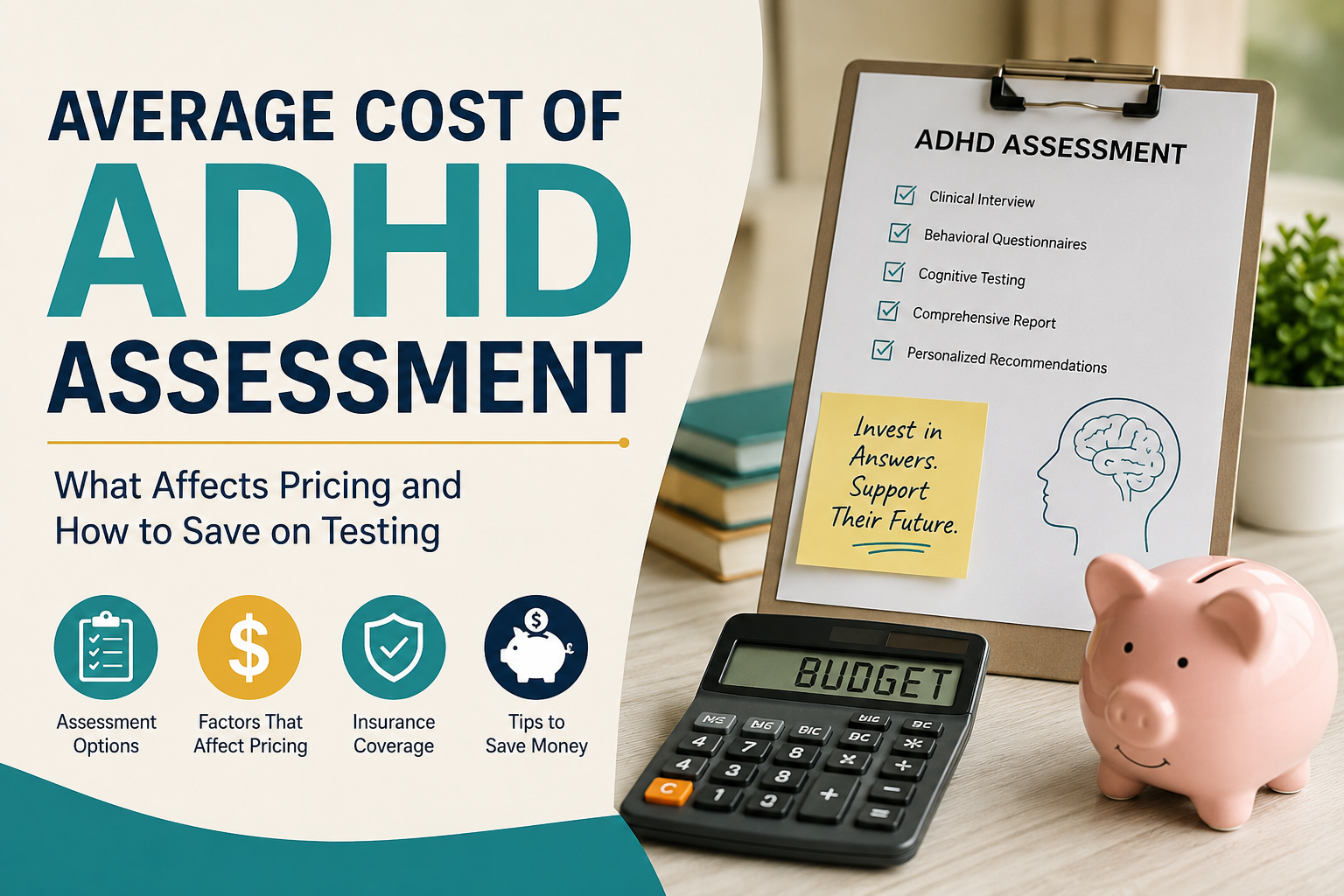
Most assessments include:
- A clinical interview to understand the individual’s history, current challenges, and symptoms
- Medical and developmental history review, especially relevant for children
- Behavioral questionnaires completed by the patient, and often by parents or teachers
- Cognitive and psychological testing to assess attention, memory, processing speed, and executive functioning
- Review of school or workplace concerns, which can provide important context for the diagnosis
The depth of this process is what separates a thorough assessment from a basic screening—and it’s also what influences cost.
Who Should Consider an ADHD Assessment?
ADHD doesn’t look the same at every age. Children may present with hyperactivity or difficulty following instructions at school. Teenagers might struggle with sustained focus, organization, or impulse control. Adults often report difficulties with time management, forgetfulness, and maintaining attention at work.
If any of these patterns sound familiar—or if a teacher, employer, or doctor has raised concerns—an ADHD assessment is worth pursuing.
What Is the Average Cost of ADHD Assessment?
In the United States, the average cost of an ADHD assessment typically ranges from a few hundred dollars to several thousand, depending on the type of evaluation and the provider. A basic screening or brief assessment tends to sit at the lower end of that range, while a comprehensive neuropsychological evaluation—which involves multiple testing sessions and a detailed written report—can be considerably more expensive.
It’s also worth noting the difference between a screening and a full diagnostic assessment. A screening identifies whether ADHD symptoms are present at a concerning level. A comprehensive evaluation goes further, ruling out other conditions, assessing cognitive functioning, and producing a report that can guide treatment and support accommodation requests.
Costs also vary by location. Urban clinics in major metropolitan areas tend to charge more than rural providers, and regional pricing differences across the U.S. can be significant.
Factors That Affect the Cost of an ADHD Assessment
Type of Evaluation
The scope of the evaluation is one of the biggest cost drivers. A basic ADHD-focused assessment is less extensive than a full neuropsychological evaluation, which may test for learning disabilities, processing disorders, and co-occurring conditions alongside ADHD.
Age of the Patient
Child assessments often involve additional components—teacher questionnaires, school records, and parent interviews—which can add time and cost. Adult evaluations may be structured differently but can be equally comprehensive when done properly.
Experience and Credentials of the Provider
Licensed psychologists, neuropsychologists, and psychiatrists all conduct ADHD evaluations, but their rates differ. Neuropsychologists, who specialize in brain-behavior relationships, typically charge more for their expertise—but that expertise often translates into more nuanced, thorough evaluations.
Geographic Location
Urban clinics generally have higher overhead costs, which are reflected in their pricing. That said, rural areas may have fewer providers, which can limit options and affect wait times.
Length and Complexity of Testing
Some cases require multiple testing sessions, additional cognitive assessments, or evaluations for co-occurring learning disabilities. Each of these adds to the overall cost but also adds clinical value.
What Is Typically Included in the Assessment Fee?
A well-structured ADHD assessment should include several key components in its base price. Before scheduling, confirm that the quoted fee covers:
- An initial consultation
- A diagnostic interview
- Standardized testing
- Behavioral rating scales
- Parent or teacher questionnaires (for children)
- Interpretation of results
- A comprehensive written report
- A feedback session with the clinician
- Treatment recommendations
Not all providers include every element. Some charge separately for the written report or feedback session, which can make a lower upfront cost more expensive in the end.
Does Insurance Cover ADHD Testing?
When Insurance May Help
Some insurance plans do cover ADHD testing, particularly when it’s deemed medically necessary. Coverage is more likely when you use an in-network provider and, in some cases, when prior authorization has been obtained. That said, coverage varies significantly between plans, and out-of-pocket costs can still be substantial even with insurance.
Questions to Ask Your Insurance Company
Before scheduling, contact your insurance provider and ask:
- Is ADHD testing covered under my plan?
- What deductible applies to psychological testing?
- Is pre-authorization required?
- Which providers in my area are in-network?
Getting clear answers upfront prevents unexpected bills later.
How to Save Money on ADHD Testing
Verify Insurance Benefits Before Scheduling
This step alone can save hundreds of dollars. Confirming what your plan covers before committing to a provider ensures you understand your actual out-of-pocket responsibility.
Choose an In-Network Provider
Out-of-network providers may be excellent clinicians, but the cost difference can be significant. When possible, prioritize in-network options without compromising on quality.
Ask About Payment Plans
Many clinics offer payment plans that spread the cost over several months. It’s always worth asking—most providers would rather work out a payment schedule than lose a patient.
Use HSA or FSA Funds
Health Savings Accounts (HSA) and Flexible Spending Accounts (FSA) can typically be used for diagnostic testing. If you have access to one, this is a smart way to offset costs with pre-tax dollars.
Compare What’s Included in the Price
When comparing providers, look beyond the base price. A lower quote that excludes the written report or follow-up session may end up costing more in total than a higher quote that includes everything.
Why Choosing the Lowest Price Isn’t Always the Best Decision
An accurate ADHD diagnosis depends on thorough testing. Cutting corners during the evaluation process can lead to misdiagnosis—or missed diagnoses entirely. ADHD frequently co-occurs with anxiety, depression, learning disabilities, and in some cases, Autism Spectrum Disorder. A comprehensive assessment is designed to identify these conditions alongside ADHD, which leads to more targeted and effective treatment.
A cheap, rushed evaluation might confirm an ADHD label without exploring the full picture. The result? Treatment that addresses only part of the problem.
Why a Comprehensive ADHD Assessment Is Worth the Investment
The benefits of an accurate, well-documented ADHD diagnosis extend well beyond the evaluation itself. Children gain access to school accommodations—such as extended test time or resource room support—that can meaningfully improve academic outcomes. Adults can request workplace accommodations that reduce daily friction. Medication decisions become better informed. Therapy becomes more targeted.
Long-term, a high-quality evaluation can improve quality of life in ways that far outweigh its upfront cost.
Why Choose Optimal Brain MN Clinic for ADHD Assessments?
Optimal Brain MN Clinic offers comprehensive ADHD evaluations conducted by experienced neuropsychology professionals. Testing is individualized for children, teens, and adults, and every evaluation includes a detailed written report with practical, actionable recommendations.
The clinic takes a compassionate, patient-centered approach—meaning each person who walks through the door receives care tailored to their specific needs, not a one-size-fits-all protocol. Located in Minnesota and grounded in evidence-based practice, Optimal Brain MN Clinic is a trusted resource for families and individuals seeking clarity and direction.
Making the Most of Your ADHD Assessment
The average cost of ADHD assessment is shaped by many variables—provider credentials, evaluation type, location, and what’s included in the fee. While cost is a real consideration, the quality and completeness of the evaluation matters just as much. An accurate diagnosis sets the foundation for effective treatment, academic and workplace support, and long-term success.
If you or someone in your family is ready to get answers, don’t let uncertainty about cost stand in the way. Contact Optimal Brain MN Clinic today to learn more about available assessments or to schedule an evaluation.
FAQs
Ans: – ADHD assessment costs in the U.S. typically range from a few hundred to several thousand dollars, depending on the type of evaluation, the provider’s credentials, and geographic location. Comprehensive neuropsychological evaluations tend to cost more than basic screenings because they involve more testing components and produce a detailed written report.
Ans: – Some insurance plans cover ADHD testing when it is deemed medically necessary and performed by an in-network provider. Coverage varies by plan, and prior authorization may be required. It’s best to contact your insurance company directly before scheduling to confirm what’s covered and what your out-of-pocket responsibility will be.
Ans: – Cost differences reflect several factors: the type and depth of evaluation, the provider’s level of training (psychologist vs. neuropsychologist vs. psychiatrist), regional pricing differences, and the number of testing sessions required. What’s included in the quoted fee—such as the written report and feedback session—also plays a major role.
Ans: – A comprehensive ADHD evaluation typically takes several hours of testing, sometimes spread across more than one session. The exact timeline depends on the individual’s age, the complexity of the case, and whether additional assessments (such as learning disability screening) are included.
Ans: – A thorough ADHD assessment generally includes a clinical interview, medical and developmental history review, standardized cognitive and behavioral testing, behavioral rating scales, questionnaires completed by parents or teachers (for children), interpretation of results, a comprehensive written report, a feedback session with the clinician, and treatment recommendations.