
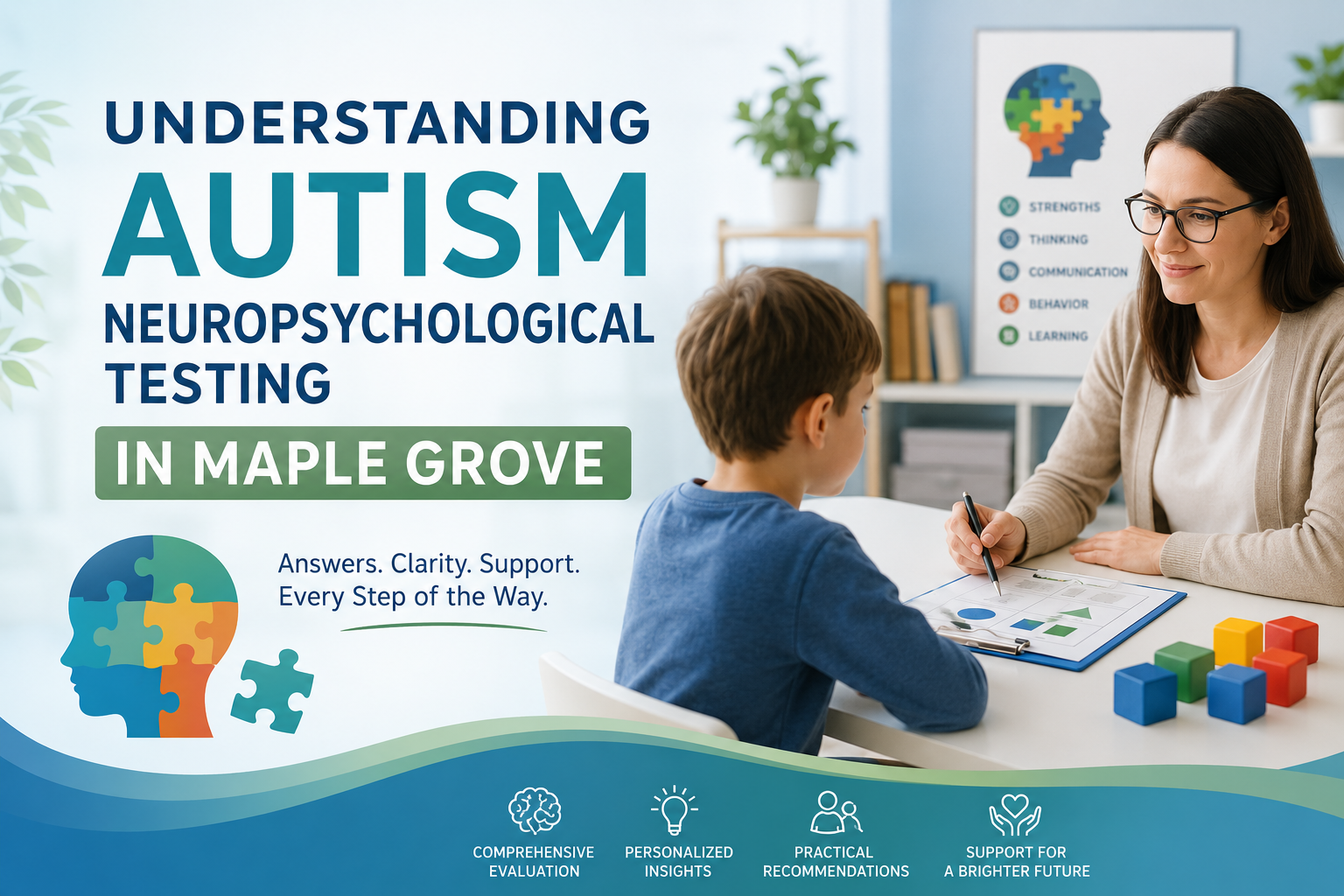
Autism spectrum disorder (ASD) affects how a person communicates, interacts, learns, and experiences the world. No two people on the spectrum are exactly alike, which is why understanding an individual’s unique profile matters so much. Some children show early signs through social or developmental differences, while some adults only recognize their traits later in life.
Families often reach a point where they want clearer answers. That’s where autism neuropsychological testing in Maple Grove comes in. This type of evaluation offers a comprehensive look at cognitive, behavioral, emotional, and developmental functioning—far beyond a simple checklist.
The value of testing goes well past a diagnosis. It can reveal a person’s strengths, pinpoint their challenges, and lead to practical recommendations for home, school, work, and treatment. Think of it as a roadmap for understanding how someone thinks, learns, and connects with others.
What Is Autism Neuropsychological Testing?
Neuropsychological testing is a structured way of measuring how the brain handles different tasks. In plain terms, it looks at how a person thinks, learns, remembers, and manages emotions and behavior.
A thorough evaluation may examine several areas, including:
- Attention and concentration
- Learning and memory
- Language and communication
- Executive functioning
- Processing speed
- Problem-solving
- Academic skills
- Emotional and behavioral functioning
The results don’t stand alone. A neuropsychological evaluation combines test scores with clinical history and other relevant information to build a broader picture of how a person functions day to day.
Optimal Brain MN Clinic explains that its neuropsychological evaluations can assess cognitive skills including intellect, learning and memory, attention, language, academics, visuospatial abilities, executive functioning, and fine motor skills.
Why Consider Neuropsychological Testing for Autism?
A parent, adult, physician, or other professional might recommend an evaluation for many reasons. Common ones include:
- Concerns about social communication or interaction
- Differences in behavior or sensory processing
- Difficulty with attention or executive functioning
- Learning or academic challenges
- Trouble managing everyday activities
- Questions about whether symptoms overlap with ADHD, anxiety, learning disorders, or other conditions
- A need for a clearer understanding of strengths and support needs
Here’s the key point: testing is a tool for understanding a person’s unique profile, not just a way to attach a label. The goal is insight, and insight opens the door to the right support.
Who May Benefit From Autism Neuropsychological Testing?
Autism looks different at every stage of life, so testing can help people of all ages.
Children may benefit when there are developmental or behavioral concerns, school difficulties, social or communication challenges, or struggles with attention, learning, or organization.
Adolescents often face increasing academic demands, social difficulties that become more noticeable, and challenges with independence and executive functioning.
Adults may seek testing for long-standing social or communication difficulties, trouble understanding past challenges, concerns that went unrecognized in childhood, or clarity around overlapping conditions.
Optimal Brain MN Clinic provides neuropsychological evaluations for ages 6 and older, with certain tele-neuropsychology services available for adults.
What Happens During Autism Neuropsychological Testing?
The process may feel unfamiliar at first, but it follows clear, manageable steps.
Step 1: Initial Interview. The provider discusses your concerns, developmental history, medical history, educational background, and goals. A parent, caregiver, or other informant may share additional information when appropriate.
Step 2: Records Review. This may include previous evaluations, school records and IEPs, medical or psychological records, and other relevant documentation.
Step 3: Cognitive and Psychological Testing. The individual completes structured activities and standardized assessments. Testing may explore attention, memory, language, reasoning, processing speed, academic abilities, and other areas.
Step 4: Additional Information. Parents, caregivers, teachers, or other professionals may provide input when appropriate and with the necessary permission.
Step 5: Results and Feedback. The provider reviews the findings, discusses any diagnosis and recommendations, and gives families room to ask questions and plan next steps.
Optimal Brain MN Clinic states that its evaluation process includes an interview, records review, testing, and a feedback/results appointment, with recommendations provided based on the findings.
How Long Does Autism Neuropsychological Testing Take?
Testing time varies based on the referral question and the individual’s needs. There’s no single answer that fits every person.
Optimal Brain MN Clinic reports that neuropsychological evaluations can take approximately 2–4+ hours, depending on the referral question, and breaks are available throughout. Results are usually reviewed during a separate feedback appointment, so the day of testing stays focused on the assessment itself.
How to Prepare for an Autism Neuropsychological Evaluation
A little preparation helps the appointment go smoothly. Consider these tips:
- Get adequate sleep before the appointment.
- Eat a normal, nutritious breakfast.
- Bring glasses, contacts, or hearing aids if normally used.
- Upload relevant medical, psychological, and educational records when requested.
- Bring previous evaluations or school documentation, such as an IEP, when applicable.
- Follow medication instructions provided by the treating physician.
- Bring snacks and dress comfortably.
- Reassure children that there are no “right” answers—they only need to do their best.
Optimal Brain MN Clinic recommends bringing relevant records, getting adequate sleep, eating beforehand, and dressing comfortably for neuropsychological evaluations.
What Can You Learn From Autism Neuropsychological Testing?
A well-rounded evaluation can uncover a lot about how a person functions. It may help identify:
- Cognitive strengths
- Areas that require additional support
- Attention and executive-functioning patterns
- Learning strengths and challenges
- Communication-related needs
- Emotional or behavioral factors
- Possible co-occurring conditions
- Recommendations for home, school, work, or treatment
The purpose is always the same: to create a more individualized understanding of the person, not to reduce them to a score.
What Happens After the Testing?
Once testing wraps up, the focus shifts to making sense of the results. This typically includes a feedback appointment where the provider explains findings in clear, understandable language. Where applicable, the provider discusses a diagnosis and shares personalized recommendations.
From there, families may receive referrals or a treatment plan. When appropriate, the provider can also coordinate care with other healthcare or educational professionals.
Optimal Brain MN Clinic notes that feedback appointments may address cognitive and emotional functioning, diagnosis, prognosis, and treatment recommendations.
Choosing Autism Neuropsychological Testing in Maple Grove
Selecting the right provider makes a real difference. As you research options, look for:
- Experience with neurodevelopmental conditions
- Appropriate credentials and training
- A comprehensive rather than one-dimensional assessment
- Clear explanation of results
- Practical, usable recommendations
- Convenient appointment options
- Insurance and payment considerations
- The ability to coordinate care when needed
Rather than chasing labels like “best,” focus on whether a provider offers the depth, clarity, and support your family actually needs.
About Optimal Brain MN Clinic
Optimal Brain MN Clinic provides comprehensive brain health and mental health services designed to support children, adolescents, adults, and families. The clinic offers neuropsychological and psychological evaluations alongside psychiatry, psychotherapy, and other specialized services. Its stated mission is to help individuals improve cognitive, emotional, and social functioning through personalized, science-driven care.
For neuropsychological evaluations, Optimal Brain MN Clinic works with patients experiencing concerns related to neurodevelopmental disorders, including autism and ADHD, as well as learning disorders, trauma, and neurological conditions. Evaluations incorporate clinical interviews, relevant records, standardized testing, and feedback to help patients and families better understand the results and identify appropriate recommendations.
If you are looking for autism neuropsychological testing in Maple Grove, contact Optimal Brain MN Clinic to discuss your concerns, evaluation options, and next steps.
Frequently Asked Questions
Ans: – Autism neuropsychological testing is a comprehensive evaluation that measures how a person thinks, learns, remembers, and manages emotions and behavior. It combines standardized tests, clinical history, and other information to build a full picture of cognitive, behavioral, emotional, and developmental functioning.
Ans: – Children, adolescents, and adults who show social, communication, learning, attention, or behavioral concerns may benefit. Testing also helps when symptoms may overlap with conditions like ADHD, anxiety, or learning disorders and families want a clearer understanding.
Ans: – Testing time depends on the referral question and the individual. Optimal Brain MN Clinic reports evaluations can take approximately 2–4+ hours, with breaks available. Results are usually reviewed in a separate feedback appointment.
Ans: – Bring relevant medical, psychological, and educational records, along with previous evaluations or an IEP when applicable. Glasses, hearing aids, snacks, and comfortable clothing help too. Follow any medication instructions from the treating physician.
Ans: – Yes. Parents and caregivers often provide developmental and background information during the initial interview. Teachers or other professionals may also contribute with the necessary permission, and families take part in the feedback appointment.