
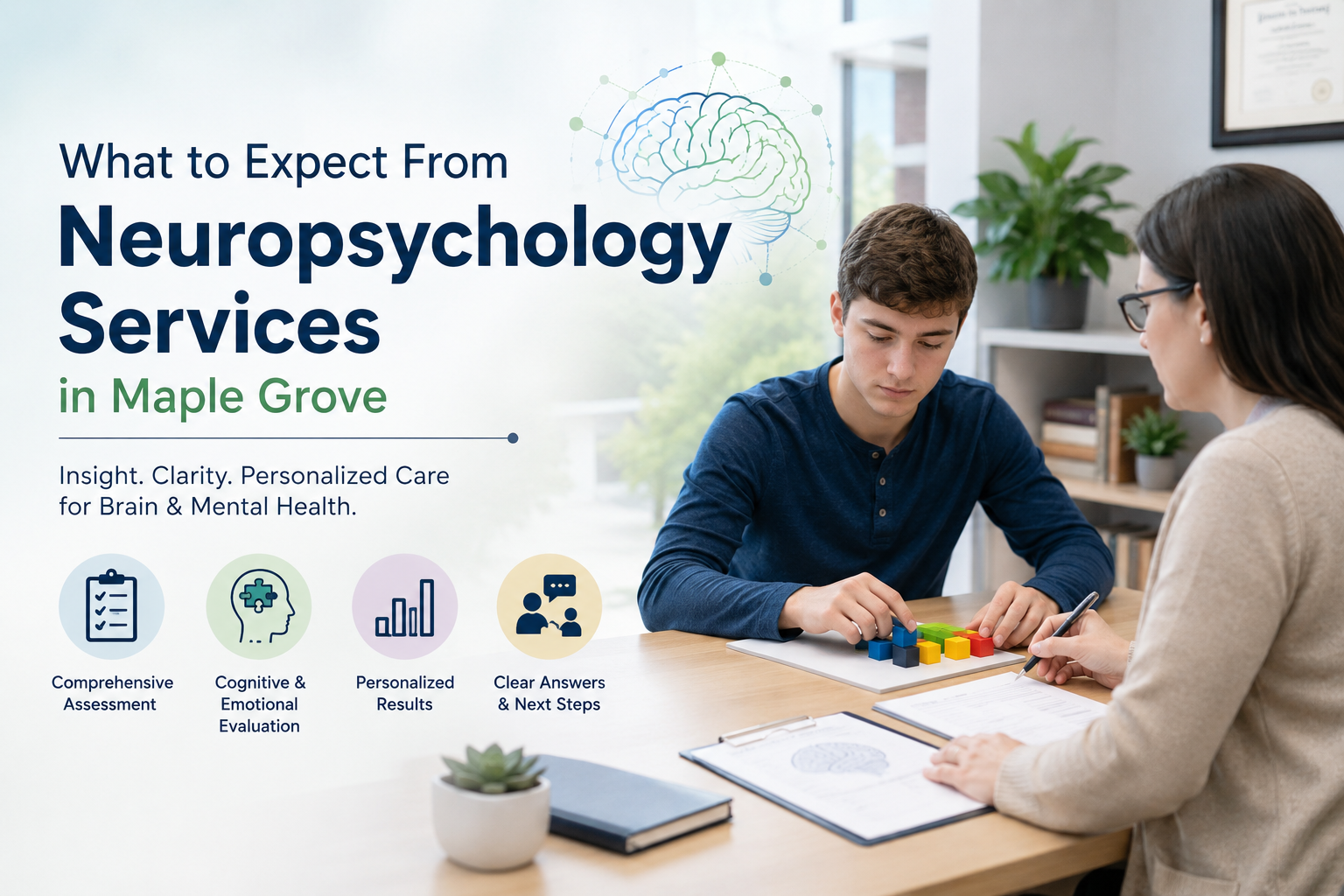
Concerns about memory, attention, learning, or unexpected changes in behavior can leave you searching for clear answers. Maybe your child is struggling in school, or perhaps you’ve noticed a loved one becoming more forgetful over time. In situations like these, a neuropsychological evaluation can offer real clarity—a detailed look at how the brain influences thinking, emotions, and everyday behavior.
If you’re considering a neuropsychology service in Maple Grove, understanding the process ahead of time can ease a lot of the uncertainty. This guide walks you through what neuropsychology services involve, who benefits from them, what happens during an evaluation, how to prepare, and what comes next once testing is complete.
What Are Neuropsychology Services?
Neuropsychology studies the relationship between brain function and behavior. A neuropsychological evaluation uses specialized testing to measure how different areas of the brain are working and how those functions show up in daily life.
This is different from a routine mental health screening or general psychological evaluation. While a standard screening might focus on mood or symptoms, a neuropsychological assessment digs deeper into specific cognitive abilities and how they connect to behavior and emotional well-being.
A comprehensive evaluation may assess several areas, including:
- Memory
- Attention and concentration
- Language
- Learning and academic skills
- Processing speed
- Executive functioning
- Visuospatial abilities
- Emotional functioning
Testing is never one-size-fits-all. Each evaluation is tailored to the individual’s specific concerns and the referral question that prompted the assessment.
Who Can Benefit From Neuropsychology Services in Maple Grove?
Neuropsychological assessments can help people at any stage of life. Children, adolescents, adults, and older adults experiencing cognitive, learning, behavioral, or emotional concerns may all benefit from a closer look at how their brain is functioning.
Common Reasons for an Evaluation
People often seek neuropsychology services for concerns such as:
- ADHD or attention difficulties
- Autism spectrum disorder
- Learning disorders
- Memory or cognitive concerns
- Concussion or traumatic brain injury
- Stroke or other neurological conditions
- Epilepsy
- Dementia or age-related cognitive changes
- Depression, anxiety, or other conditions that affect cognitive functioning
It’s worth noting that testing doesn’t automatically hand you a diagnosis. Instead, the evaluation helps clinicians understand patterns of strengths and difficulties. Those insights then inform diagnosis, recommendations, and a path forward.
What Happens During a Neuropsychological Evaluation?
A neuropsychological evaluation is a multi-step process, not just a stack of tests to complete. Each stage builds on the last to create a full picture of how someone thinks, feels, and functions.
1. Initial Interview and Intake
The process usually begins with a conversation. The provider will discuss your concerns, history, symptoms, and goals, then review relevant medical, psychological, developmental, and educational information. When appropriate and with permission, a family member or informant may share additional observations that help round out the picture.
2. Review of Relevant Records
Background information adds important context. The provider may review documents such as:
- Previous psychological or neuropsychological evaluations
- School records or IEPs
- Medical records
- MRI or CT results
- Relevant laboratory information
3. Cognitive and Psychological Testing
During testing, patients complete structured activities designed to measure different cognitive abilities. These activities may look at:
- Attention
- Memory
- Language
- Academic functioning
- Executive functioning
- General intellectual abilities
- Visuospatial skills
- Fine motor skills
- Emotional functioning
The tasks vary widely depending on the reason for the referral, so no two evaluations look exactly the same.
4. Results and Feedback Session
Once testing wraps up, the provider scores and analyzes the results. During a dedicated feedback session, the neuropsychologist discusses the findings, answers questions, and explains any diagnoses or areas of concern when applicable. You’ll also receive personalized recommendations and information about possible treatment or support options.
According to Optimal Brain MN Clinic, feedback is generally scheduled about one to two weeks after the evaluation, depending on the process involved.
How Long Does Neuropsychological Testing Take?
There’s no single answer here—duration depends on the reason for referral and the specific tests required. Many evaluations run between two and four or more hours, with breaks available whenever needed. Some assessments may be split across different stages or sessions.
The best advice? Set aside enough time so you don’t feel rushed. Giving yourself room to move through the appointment at a comfortable pace leads to more accurate, meaningful results.
How to Prepare for a Neuropsychology Appointment
A little preparation goes a long way. Use this checklist to get ready:
- Get a good night’s sleep before your appointment.
- Eat a meal beforehand so you have steady energy.
- Bring glasses, contact lenses, or hearing aids if you use them.
- Gather relevant medical, educational, and previous testing records.
- Bring a list of your current medications.
- Follow any medication instructions from your healthcare provider.
- Wear comfortable clothing.
- Pack snacks if appropriate.
- Write down questions about anything you’re unsure of before testing begins.
One important note: there’s no need to “study” for cognitive testing. The goal is to understand your typical, everyday functioning—not how well you can prepare for an exam.
What Happens After Neuropsychological Testing?
Once the testing is done, the process moves into interpretation and planning. Here’s what typically follows:
- Test results are scored and interpreted.
- The neuropsychologist reviews patterns of strengths and difficulties.
- Results are discussed during a feedback appointment.
- Personalized recommendations may be provided.
- A written report may be shared with you and, when authorized, with members of your care team.
- Additional treatment or services may be recommended when appropriate.
These results can play a valuable role in informing diagnosis and shaping treatment recommendations, giving you and your providers a clearer direction.
Why Choose a Neuropsychology Service in Maple Grove?
Choosing a local, specialized provider offers several practical advantages:
- Convenient access to specialized brain-health assessment close to home.
- Personalized evaluation built around your individual concerns.
- Comprehensive assessment that draws on multiple measures rather than a single test.
- Clear explanations of findings and next steps.
- Coordination with other mental health or healthcare services when needed.
In-person and telehealth neuropsychological evaluation options are available through Optimal Brain MN Clinic, depending on age and service eligibility.
If you or your child is experiencing concerns with attention, memory, learning, behavior, or cognitive functioning, a neuropsychological evaluation may help provide greater clarity. Contact Optimal Brain MN Clinic to learn more about available neuropsychology services and determine the next step.
About Optimal Brain MN Clinic
Optimal Brain MN Clinic provides comprehensive brain-health and mental-health services designed to support cognitive, emotional, and social functioning. The clinic offers neuropsychological and psychological evaluations, psychiatry, psychotherapy, family and group therapy, sleep medicine, and other specialty services. Its neuropsychological evaluations are available for qualifying individuals across a range of ages and can be provided in person, with telehealth options available for eligible services.
The clinic emphasizes personalized, evidence-based care and works to understand each individual’s concerns, strengths, and goals. Its neuropsychological evaluation process combines clinical interviews, record review, standardized testing, interpretation of results, and feedback to help patients and families better understand cognitive and emotional functioning. Ready to take the next step? Contact Optimal Brain MN Clinic to discuss whether a neuropsychological evaluation may be right for your needs.
FAQs
Ans: – A neuropsychological evaluation measures a range of cognitive and emotional functions, including memory, attention, language, learning and academic skills, processing speed, executive functioning, visuospatial abilities, and emotional functioning. The specific tests used depend on your concerns and the referral question.
Ans: – Most evaluations take between two and four or more hours, with breaks available as needed. The exact length depends on the reason for the referral and the tests required. Some evaluations may be spread across multiple sessions.
Ans: – No. Neuropsychological testing benefits people of all ages—children, adolescents, adults, and older adults—who are experiencing cognitive, learning, behavioral, or emotional concerns.
Ans: – You don’t need to study or review anything ahead of time. It helps to get a good night’s sleep, eat a meal, bring any glasses or hearing aids you use, and gather relevant records and a list of your medications. The goal is to capture your typical, everyday functioning.
Ans: – Neuropsychological testing doesn’t automatically produce a diagnosis. Instead, it identifies patterns of strengths and difficulties that help clinicians inform a diagnosis—such as ADHD or autism spectrum disorder—along with tailored recommendations and support options.