Autism spectrum disorder (ASD) affects how a person thinks, communicates, and relates to the world—and it looks different in everyone. Two people with the same diagnosis can have very different strengths and challenges. That variety is exactly why families often seek a professional evaluation to gain clarity.
Neuropsychological testing for autism in Maple Grove is one way clinicians build a fuller understanding of how someone functions cognitively, emotionally, behaviorally, and developmentally. It’s not just about assigning a label. A good evaluation highlights a person’s strengths, pinpoints their challenges, and leads to practical recommendations. Optimal Brain MN Clinic provides neuropsychological and psychological evaluations for a range of neurodevelopmental concerns, including autism.
What Is Neuropsychological Testing for Autism?
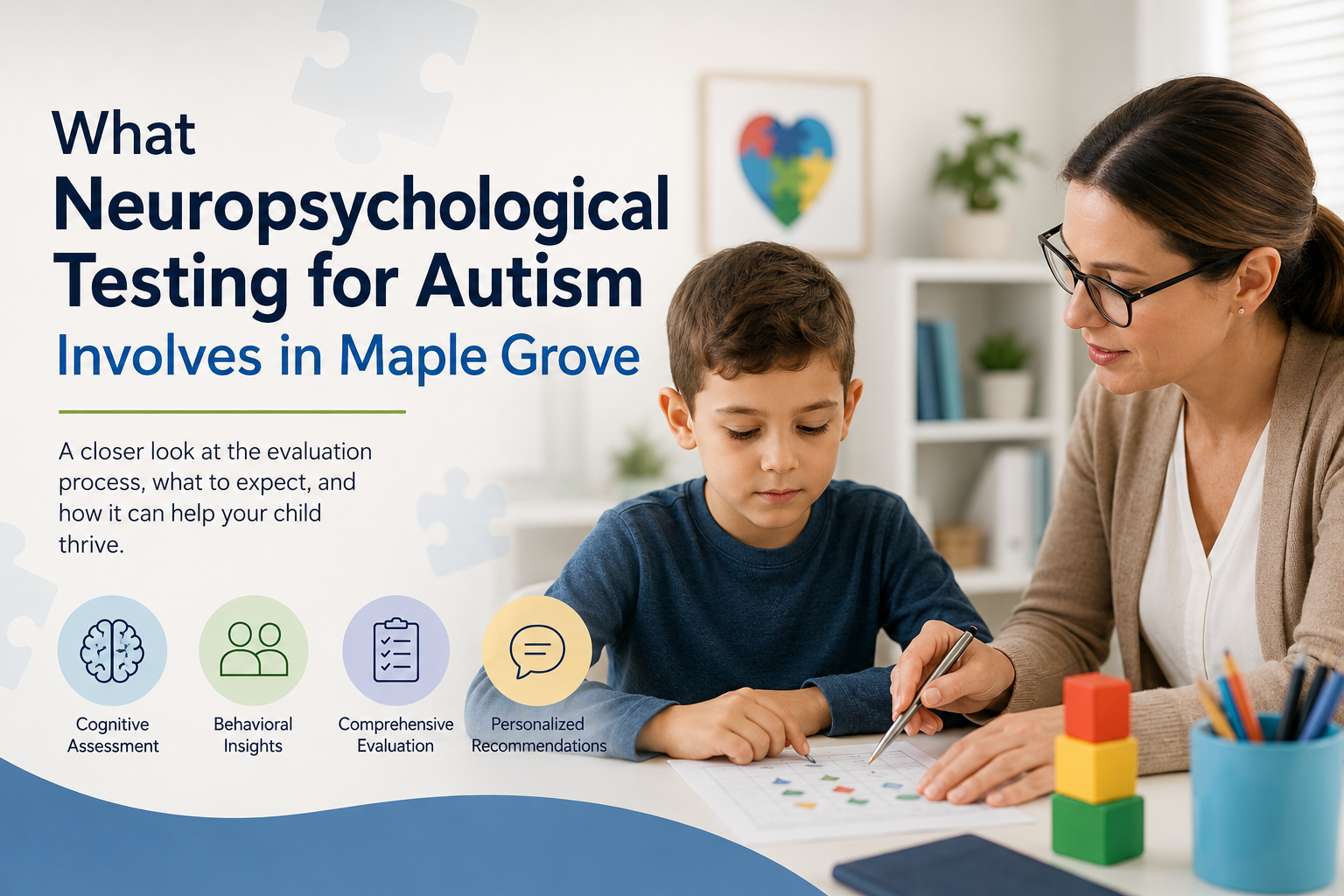
A neuropsychological evaluation is a structured assessment of how different areas of the brain and behavior work together. Rather than focusing on a single symptom, it looks at the bigger picture.
Clinicians may examine several cognitive areas, including:
- Attention
- Memory
- Language
- Learning
- Executive functioning
- Processing and problem-solving
- Visuospatial skills
Emotional and behavioral functioning are often considered as well. Together, these findings paint a more complete portrait of where someone excels and where extra support might help.
At Optimal Brain MN Clinic, the neuropsychological evaluation is a process, not a single test. It typically involves a clinical interview, a review of records, testing, and careful interpretation of the results.
Who May Benefit From Autism-Related Neuropsychological Testing?
An evaluation can be helpful at almost any stage of life.
For children, common reasons include:
- Developmental or social concerns
- Difficulty with communication or interactions
- Unusual behavioral patterns
- Academic or learning challenges
- Difficulty with attention, flexibility, or transitions
For adults, reasons often include:
- Long-standing social or communication difficulties
- Trouble understanding social cues
- Sensory or behavioral concerns
- Challenges with organization or executive functioning
- A desire for clarity about lifelong developmental differences
Autism symptoms frequently overlap with ADHD, anxiety, learning disorders, and other conditions. A comprehensive assessment helps sort out what’s really going on, so recommendations fit the person rather than a guess.
What Happens During Neuropsychological Testing for Autism in Maple Grove?
The process usually unfolds across several clear steps.
Step 1: Initial Interview
The evaluation starts with a conversation. The provider gathers information about current concerns, developmental history, medical history, and how the person is doing at school or work. Goals for the evaluation are discussed too. For children, parents or caregivers often share additional background.
Step 2: Review of Records
Next, the clinician reviews relevant documentation, which may include:
- Previous psychological evaluations
- School records or IEP information
- Medical or treatment records
- Other relevant paperwork
Step 3: Cognitive and Psychological Testing
The individual then completes a series of structured tasks designed to measure how the mind works. Depending on the referral question, testing may touch on:
- Attention
- Memory
- Learning
- Language
- Intellectual functioning
- Executive functioning
- Academic abilities
- Emotional functioning
Step 4: Informant Questionnaires
Parents, caregivers, teachers, or other appropriate people may be asked to fill out questionnaires. This step matters because it shows how the individual functions across different settings—home, school, or work.
Step 5: Results and Feedback
Finally, the provider reviews all the findings and explains them during a feedback appointment. This is where recommendations and next steps come to life. At Optimal Brain MN Clinic, the evaluation process can include an intake, testing, informant assessments, and a results session that’s generally scheduled about one to two weeks after testing.
How Long Does Autism Neuropsychological Testing Take?
There’s no single answer, because the length depends on the referral question and the person’s needs. At Optimal Brain MN Clinic, neuropsychological evaluations may take roughly two to four or more hours, with breaks available whenever they’re needed. Keep in mind that the full process can also involve an intake period, questionnaires, and a separate feedback appointment. When booking, it’s smart to ask what schedule to expect so you can plan the day.
How to Prepare for Autism Neuropsychological Testing
A little preparation goes a long way toward a smooth appointment. Here are some practical tips:
- Get a good night’s sleep beforehand.
- Eat a hearty breakfast or meal before you arrive.
- Bring glasses, contacts, or hearing aids if you use them.
- Gather relevant school, medical, psychological, or neuropsychological records.
- Bring details about any previous diagnoses or treatments.
- Reassure the child or adult that this isn’t a test they need to “pass.”
- Pack snacks and dress comfortably.
Optimal Brain MN Clinic specifically recommends adequate sleep, a solid breakfast, relevant records, assistive devices, and comfortable clothing.
What Can You Learn From the Results?
The results turn hours of observation and testing into useful, real-world insight. An evaluation may help clarify:
- Cognitive strengths
- Areas of difficulty
- Attention and executive-functioning concerns
- Learning or academic needs
- Emotional or behavioral factors
- How symptoms affect school, work, relationships, or daily life
- Whether additional assessment or treatment may be appropriate
The point isn’t simply to hand someone a label. The goal is to translate findings into recommendations that actually help. Optimal Brain MN Clinic notes that results can include findings, a diagnosis, prognosis, and treatment recommendations, with reports made available to the patient and care team when requested.
Why Choose Optimal Brain MN Clinic for Neuropsychological Testing?
Optimal Brain MN Clinic provides comprehensive mental health and brain-health services for children, adolescents, adults, and older adults. The clinic offers neuropsychological and psychological evaluations for concerns such as autism spectrum disorder, ADHD, learning disorders, trauma, and neurological conditions.
Its neuropsychological evaluation process combines clinical interviews, record reviews, standardized testing, and feedback sessions to help patients and families understand cognitive, emotional, and behavioral functioning. The clinic’s providers include clinical neuropsychologists who work closely with patients and families to explain diagnoses and build individualized recommendations.
Beyond testing, Optimal Brain MN Clinic also offers psychiatry, psychotherapy, family therapy, and other specialty services—so patients can access several types of care through one practice.
If you’re looking for neuropsychological testing for autism in Maple Grove, contact Optimal Brain MN Clinic to discuss your concerns, evaluation options, and next steps.
Taking the Next Step
An autism evaluation can bring real clarity about a person’s unique strengths and challenges. Neuropsychological testing is a structured process that draws information from many sources—interviews, records, testing, and the people who know the individual best. If you are considering neuropsychological testing for autism in Maple Grove, a comprehensive evaluation can be an important first step toward understanding your needs and identifying appropriate support. Reach out to Optimal Brain MN Clinic to start the conversation.
FAQs
Ans: – It’s a structured assessment of how the brain and behavior function. The process typically includes a clinical interview, a review of records, cognitive and psychological testing, informant questionnaires, and a feedback session where results and recommendations are explained.
Ans: – The time varies based on the referral question and individual needs. At Optimal Brain MN Clinic, evaluations may take roughly two to four or more hours, with breaks as needed. A separate feedback appointment is usually scheduled about one to two weeks later.
Ans: – Yes, a comprehensive evaluation can help clarify whether autism is present. Because autism symptoms often overlap with conditions like ADHD, anxiety, and learning disorders, thorough testing helps distinguish between them and leads to accurate recommendations.
Ans: – Testing can benefit people across the lifespan, from young children with developmental concerns to adults seeking clarity about long-standing differences. The specific tasks and approach are tailored to the individual’s age and needs.
Ans: – Yes. Parents and caregivers often provide valuable background during the interview and may complete informant questionnaires. Their input helps clinicians understand how a child functions across different environments, such as home and school.