
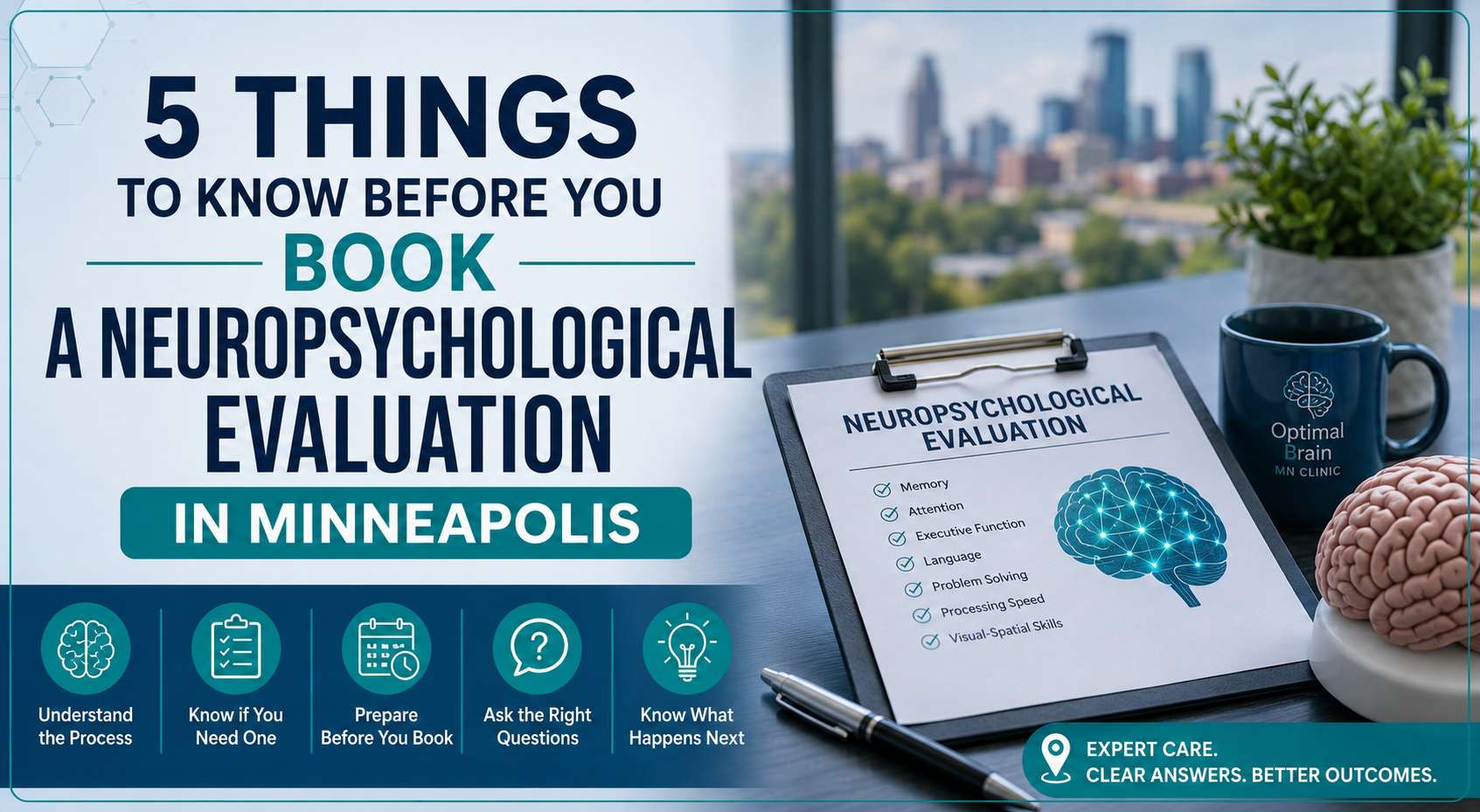
Awareness around cognitive and mental health is growing—and for good reason. More families, adults, and older individuals are recognizing that ongoing struggles with memory, focus, learning, or behavior may have a neurological explanation worth exploring. Even so, many people delay getting help simply because they don’t know what the process looks like or what to expect.
That hesitation is understandable. A neuropsychological evaluation can sound clinical and intimidating. But knowing what it involves before you walk through the door can reduce anxiety, improve your preparation, and ultimately lead to a more accurate result.
If you’re looking to book a neuropsychological evaluation in Minneapolis, this guide covers five things you should know first. From understanding the testing process to choosing the right clinic, the right preparation can make all the difference—helping you move from uncertainty to clarity, and from diagnosis to a personalized treatment plan. Clinics like Optimal Brain MN offer comprehensive evaluations for children, adults, and seniors, with both in-person and telehealth options available for many services.
1. Understand What a Neuropsychological Evaluation Actually Is
A neuropsychological evaluation is a structured assessment of how your brain is functioning. It goes well beyond a standard psychological test. Rather than focusing primarily on mood or mental health symptoms, neuropsychological testing examines the relationship between brain function and behavior through a detailed battery of tasks and measures.
During the evaluation, a licensed neuropsychologist assesses a range of cognitive abilities, including:
- Memory – both short-term and long-term recall
- Attention and concentration – the ability to focus and sustain effort
- Executive functioning – planning, organization, and decision-making
- Language – comprehension, expression, and word retrieval
- Processing speed – how quickly the brain responds to information
- Problem-solving – reasoning and cognitive flexibility
- Visual-spatial skills – perceiving and organizing visual information
People seek this type of testing for many reasons. Common referral reasons include ADHD, learning disabilities, autism spectrum disorder, concussions, traumatic brain injuries, stroke recovery, dementia, and memory concerns. The goal isn’t just to label a condition—it’s to understand how a person’s brain works so that support and treatment can be tailored accordingly.
2. Know Whether You Actually Need One
Not every cognitive concern requires a full neuropsychological evaluation. But certain patterns of symptoms suggest that testing could provide meaningful answers.
In children, warning signs often appear at school. Academic struggles, reading difficulties, poor concentration, and behavioral challenges that don’t resolve with standard support may point to an underlying learning disability, ADHD, or developmental difference worth assessing formally.
In adults, the picture looks different. Brain fog, memory lapses, difficulty focusing at work, or a noticeable decline in performance that affects daily functioning can all be signs that testing is appropriate.
In older adults, forgetfulness and confusion are sometimes dismissed as a normal part of aging—but they aren’t always. Cognitive decline, dementia screening, and memory concerns are among the most common reasons older adults are referred for evaluation.
Referrals typically come from primary care physicians, psychiatrists, neurologists, or schools. That said, many clinics now accept self-referrals, meaning you can schedule an evaluation without first obtaining a physician’s order. If you’ve been noticing persistent symptoms and want answers, that option exists.
3. Prepare Before You Book Your Appointment
How well you prepare for a neuropsychological evaluation directly affects the accuracy of the results. Testing measures your brain at its functional baseline—so arriving exhausted, hungry, or without relevant records can skew the outcome.
Here’s a practical checklist to help you prepare:
- Gather previous medical records, especially those related to the current concern
- Collect school reports or prior evaluations if the assessment involves a child
- Prepare a current medication list, including dosages
- Confirm your insurance information and understand your coverage before the appointment
- Sleep well the night before — fatigue measurably affects cognitive performance
- Eat a full meal beforehand — testing requires sustained concentration
- Wear glasses or hearing aids if you use them
- Bring snacks for longer appointments, especially for children
It’s worth noting that evaluations can take several hours, sometimes spread across multiple sessions, depending on the reason for referral and the complexity of the assessment. Planning ahead—rather than squeezing the appointment into a busy day—will help you get the most accurate results.
4. Ask These Questions Before Choosing a Neuropsychology Clinic
Not all neuropsychology clinics are the same. Before you commit, take the time to ask the right questions. The answers will help you determine whether a clinic is genuinely equipped to meet your needs.
Key questions to ask:
- Does the clinic evaluate both children and adults, or does it specialize in one population?
- Are evaluations customized to the individual’s concerns, or is testing standardized across all patients?
- Does the clinic accept insurance? What does coverage typically include?
- How long is the current wait time for an appointment?
- Will you receive a detailed written report following the evaluation?
- Will that report include specific treatment recommendations?
- Is follow-up care or feedback available after testing is complete?
Beyond these questions, consider whether the clinic offers integrated care. A diagnosis is only the first step. Clinics that also provide psychiatry, therapy, medication management, ADHD treatment, and family counseling allow patients to transition directly from diagnosis into treatment—without the added burden of locating multiple providers and coordinating care across separate systems.
This continuity matters. It shortens the gap between identifying a problem and actually addressing it.
5. Know What Happens After the Evaluation
The evaluation itself is only part of the process. After testing is complete, the neuropsychologist scores and interprets the results—a process that typically takes one to two weeks. From there, you’ll receive a comprehensive written report and a feedback session where the findings are explained in plain language.
If a diagnosis is appropriate, it will be identified at this stage. More importantly, the report will include personalized recommendations, which may involve:
- School accommodations (such as extended testing time or specialized instruction)
- Workplace accommodations
- Referrals to therapy or counseling
- Medication management if indicated
- Cognitive rehabilitation strategies
One point worth emphasizing: the purpose of testing is not simply to assign a label. Neuropsychological evaluation provides clarity—an evidence-based understanding of how a person’s brain functions and where targeted support can help. For many patients and families, that clarity alone is a significant relief.
Why Minneapolis Residents Choose Local Neuropsychological Care
There are real advantages to working with a clinic close to home. Local providers are easier to follow up with, and they can coordinate more efficiently with your primary care physician, school team, or specialist network. Providers familiar with the Minneapolis area understand the resources available through Minnesota’s school systems and local healthcare infrastructure—an advantage that can translate directly into more actionable recommendations.
Optimal Brain MN Clinic serves children, adults, and older adults across the Minneapolis area with an evidence-based, multidisciplinary approach. Their team offers comprehensive neuropsychological evaluations alongside psychiatry, therapy, and medication management—ensuring that patients don’t have to start from scratch once testing is complete.
Take the Next Step With Confidence
Booking a neuropsychological evaluation is a meaningful decision—and knowing what to expect makes it a less daunting one. To summarize: understand what the evaluation measures, determine whether testing is appropriate for your situation, prepare thoroughly before your appointment, choose a clinic that can answer your questions clearly, and know that the evaluation is just the beginning of a larger process aimed at helping you thrive.
If you or someone you care about has been experiencing ongoing cognitive, learning, or memory concerns, don’t wait for symptoms to worsen before seeking answers. Book a neuropsychological evaluation in Minneapolis with a qualified team that can guide you from assessment to action.
FAQs
Ans: – You can contact a neuropsychology clinic directly, either through their website or by phone. Some clinics, including Optimal Brain MN, accept self-referrals, meaning you don’t need a physician’s order to schedule an evaluation.
Ans: – Most evaluations take between three and eight hours, sometimes spread across multiple sessions. The exact length depends on the reason for referral and the scope of the assessment.
Ans: – Neuropsychological testing can help identify ADHD, learning disabilities, autism spectrum disorder, traumatic brain injury, concussions, memory disorders, dementia, and the cognitive effects of stroke, among other conditions.
Ans: – Not necessarily. Many clinics accept self-referrals, allowing you to schedule an evaluation without a formal referral from a physician. However, some insurance plans may require one for coverage purposes—check with your provider in advance.
Ans: – Coverage varies by plan and provider. Many insurance plans do cover neuropsychological evaluations, particularly when medically necessary. Contact your clinic and insurance provider before your appointment to clarify what is and isn’t covered.